


Spelling matters. It shapes clarity in writing, builds confidence in communication, and underpins success in both study and professional life. If you have ever hesitated over the placement of a vowel or swapped letters around in a hurry, you are in the company of many. A dedicated practice tool can make a world of difference, especially one that brings sound, meaning, and context together. The Spelling Test App is designed with an Australia based focus and uses Australian spelling words, which will feel familiar to learners who work in British English. I have spent time exploring the site, taking tests, and reflecting on the features that support effective spelling practice. Below you will find a detailed look at what the site offers, how a level test plays out, and how you might use its features to build lasting accuracy.

First impressions and navigation
At first glance the site keeps things straightforward. Clear calls to action invite you to begin practising, and there is a sense that you can get to your first test within seconds. Audio support is front and centre, which is essential for spelling. You hear a word pronounced, then, if you wish, you can play an audio definition and an audio example sentence. This combination nudges you beyond guesswork and into meaning. For many learners the sound of a word does not immediately translate into letters on a page, so pairing pronunciation with meaning helps fix spelling in memory.
The menu presents levels that cover a broad range, from school years through to adults. This means you can pick a difficulty that suits your current ability or choose a level that stretches you. For learners in Australia, year levels will feel especially relevant, while adult level words venture into advanced vocabulary that is useful for academic writing and professional communication. The design is uncluttered, and the options for customising a test are visible without digging through settings.
Audio, definitions, and example sentences
Audio support does a lot of heavy lifting here. You can replay a word as many times as you need, and if the pronunciation is unfamiliar or the accent is new to you, repetition gives you time to adjust. The definition and example sentence further anchor the word. If you hear obfuscate and the spelling does not spring to mind, the definition render obscure, unclear, or unintelligible immediately points you to context that helps with memory. The example sentence gives you a usage pattern that is closer to life, and that often unlocks recall. Hearing a word used in a legal or academic context, for instance, can trigger associations with a report you have read or a lecture you attended.
A note on audio practice. Use a good headset or speakers. The site reminds you to check your audio, and this is not just a technical step. Clear sound helps you distinguish similar phonetic patterns that can be confusing, such as the difference between the vowel sounds in pernicious and mellifluous. A slight shift in stress can change the letters you reach for, and quality audio reduces that risk. Alongside this, repeat the audio word before you type. One replay often is not enough when you move into advanced vocabulary.
Starting a test and choosing options
You can customise your test easily. Pick the number of words, select a timer or choose no timer, and set your level. For the first run I chose the adult level, five words, and no timer. Timers are available for those who like a brisk challenge, but an untimed run gives space to think through the sounds, syllables, and roots of a word. The untouched simplicity of this workflow means you do not spend time fussing with settings and get straight to learning.

Why test customisation matters
Customisation is not just a convenience. It has a direct impact on memory formation. A shorter test reduces cognitive load and keeps focus sharp, which suits early practice and new words. As you progress, longer tests build endurance and improve consistency. Timers can help learners who tend to second guess or over edit. The pressure of limited time pushes quick recall. On the other hand, removing the timer is helpful when you want to break a word into parts and think about its origin. That space is invaluable for deep understanding, and it pays off when you meet the word again in a different setting.
Adult level test walkthrough
Here is how the adult level test felt in practice. The site played each word, then allowed me to replay and call up a definition and an example sentence. I typed my attempt and checked the spelling to see where I stood. As you will see, the choice of words is properly challenging, and the process rewards careful listening, clear thinking, and steady practice.
Word one Obfuscate
Hearing obfuscate for the first time can be tricky, especially if the sound pattern is not familiar. The definition render obscure, unclear, or unintelligible immediately gives shape to the word. In practice, obfuscate is used when someone deliberately makes something difficult to understand, often in legal or technical contexts. The example sentence referenced a lawyer and legal language, which captures real world usage well. If you struggle with spelling this word, a memory approach helps. Break it into parts and pronounce them slowly, ob fu scate. There is a Latin root at work here, related to the idea of darkening or making something less clear. Visualise fog drifting across a bright screen until details disappear. That mental image aligns with the meaning and helps anchor the unusual letter sequence u s c a t e.
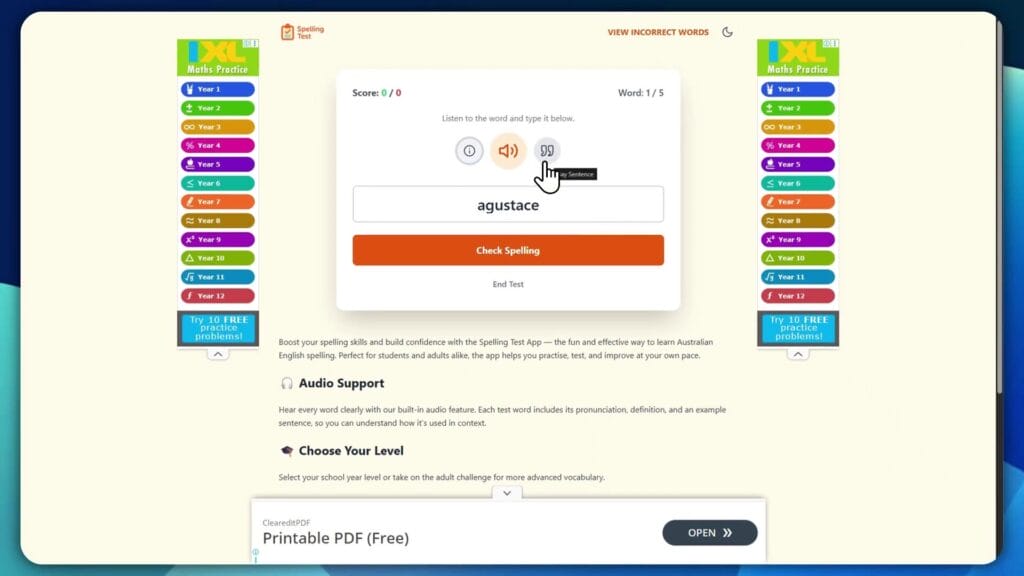
Listeners often confuse the middle consonants and write obfiscate or offiscate. Replaying the audio and reading the definition can correct that confusion. A simple tip, think of the sister word obscure. The ob start and the s c cluster echo across both words. When you encounter an advanced word with unusual spelling, link it to simpler relatives whenever possible.
Word two Pernicious
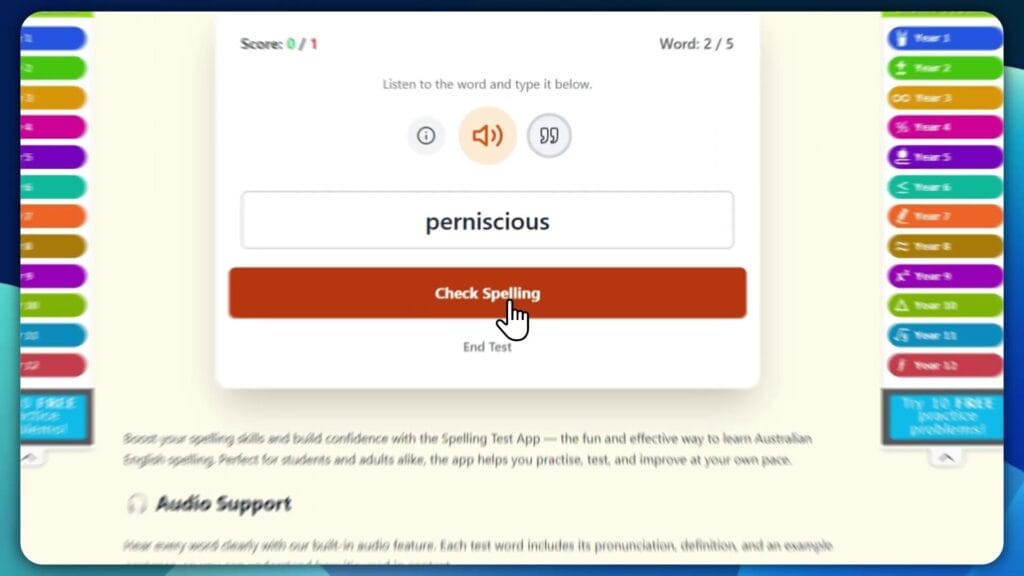
The app pronounced pernicious and offered the definition having a harmful effect, especially in a gradual or subtle way. This nuance matters. Pernicious does not describe a sudden blow. It marks slow damage creeping over time. In public life, pernicious rumours chip away at reputation. In health, a pernicious habit undermines wellbeing quietly. The spelling trips learners because the stress falls on the second syllable and can blur the letters around ni ci. A helpful cue comes from Latin, where pernicies refers to ruin or destruction. Think of a slow leak in a boat that eventually sinks it. That image keeps the harm subtle yet decisive, and it supports recall of the ni ci o u s run of letters.
If your first attempt lands on penicious or picious as it did for me, replay the audio, read the definition aloud, and write the word out by hand once. Speaking and writing activate different memory paths. Hearing the example sentence about rumours eroding a candidate’s public image made the meaning vivid. That immediacy makes the spelling stick the next time you meet the word in reading.
Word three Mellifluous
A beautiful word that belongs in the vocabulary of anyone who writes about sound, music, or voice. Mellifluous describes a smooth, sweet sound, pleasing to the ear. The confusion here is common. Learners often reach for maleifluous or maleifuous because the middle sounds tilt toward li flu ous and the opening syllable is soft. Remember that melli links to honey, a Latin root mel. When you think of honey, you think of sweetness and smooth flow, precisely what mellifluous means. In practice, use it to describe a singer’s voice that glides through notes, a river that murmurs softly, or a speaker whose tone soothes an audience. The li f l u o u s letter string feels unusual, so break it into li flu ous and practise saying it slowly. The result is a spelling that maps closely to careful pronunciation.
Word four Sagacious
Sagacious moves away from sound and into insight. It means wise and discerning, often with a practical edge. Someone sagacious sees through surface glitter to the quality underneath. The root connects to sagax in Latin, meaning acute or keen. In everyday use you might call a mentor sagacious if they offer advice that cuts through confusion. The spelling here is more approachable than the previous words, but learners sometimes swap letters around the g a c i o u s segment. Speak it slowly, sa ga cious, and think of the related noun sagacity. Pairing the adjective and noun builds a family of forms in memory, which reduces error. The site’s sentence examples help frame the word in context, and that is crucial for vocabulary that is uncommon in casual speech.
Word five Cacophony
Cacophony returns to sound, but in contrast to mellifluous it signals harsh, discordant noise. The roots are Greek, kakos meaning bad and phone meaning sound. Once you hold that meaning in mind, the spelling becomes easier to recall. The c a c o p h o n y sequence looks complicated but maps cleanly to syllables, ca co pho ny. The app’s audio and sentence example drive home the idea. Think of a busy city intersection at rush hour, with horns, engines, and voices clashing. That mental scene builds a lasting memory for both spelling and meaning. If you find yourself lost mid word, pause, replay the audio, and tap into the Greek origin. Many English words that describe sound carry phone inside them, such as symphony and euphony. Building links between these words helps accuracy across the group.
Seeing your results and learning from errors
At the end of the test the app reveals your accuracy, lists the words you attempted, and presents the correct spellings. The display is simple and honest. If you guessed, you see where your guess departed from the target word. If you were close, you learn exactly which letter or syllable slipped. In my run the adult level was tough. I stumbled on obfuscate, pernicious, and mellifluous, and felt less certain on cacophony despite familiarity with the meaning. That is normal when you shift from reading a word passively to writing it on demand.
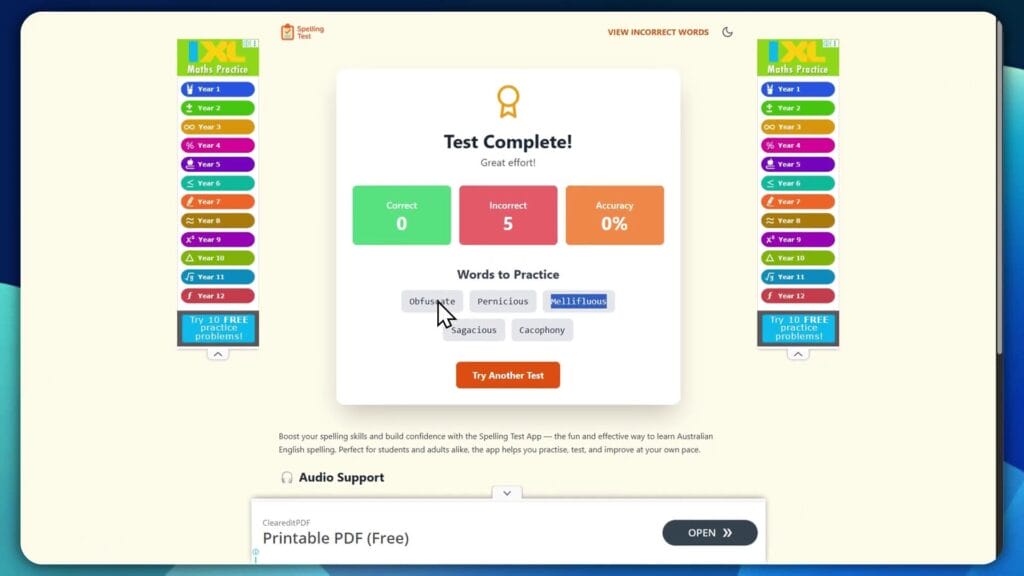
The key here is reflection. Do not skip past the results screen. Take a minute to compare your attempt with the correct spelling. Say the word aloud and trace the letters with your finger. If you have time, write each tricky word once. The act of writing slows thinking just enough to form a clear map of the letters. The app encourages replay and rereading the definition, which enriches the mapping. Keep a small list of your personal errors and revisit them later with a short practice session. Every time you review, you reduce friction the next time the word appears.
Exploring the incorrect word list
Beyond your own results the site offers an incorrect word list drawn from words that many users get wrong. This crowd informed feature is a smart way to focus practice. It highlights words that tend to trap learners and invites you to pay special attention to them. For example, if many users struggle with mellifluous, you know you are not alone, and you also know that a little extra practice will pay off because the word has a high chance of causing errors for others as well. Scan the list, pick a handful that you find tricky, and build a mini practice set. Repeat audio, read definitions, and write sentences that use each word naturally. Over time, your accuracy climbs and your comfort with advanced vocabulary grows.
This list also has motivational value. It normalises error and frames it as part of learning. Seeing popular errors takes away the sting of getting a word wrong. It shifts attention toward improvement and guides effort toward areas that will have the largest impact.
Timers and pacing for different learners
Timers are not just for speed. They shape attention. Choosing a timer creates a smooth rhythm in your practice and prevents overthinking. For learners who plan to sit exams where timing matters, a timer builds fluency under pressure. For those who prefer depth, the no timer option allows methodical analysis. Start with untimed practice when you learn new words, then use a timer once you feel more confident. The app’s simple timer options make this progression effortless.
Audio quality, accent, and clarity
Because the app is Australia based, the pronunciation reflects that context. For learners accustomed to British English, the accent will feel close and familiar. The audio clips are clear enough to support repetition without distortion. Still, do not assume a single replay is sufficient for complex words. Some consonant clusters require careful listening. The c ph sound in cacophony and the sc in obfuscate benefit from two or three listens. To maximise clarity, reduce background noise and use headphones. If you initially mishear a word, press repeat and listen for stress placement. English stress patterns guide the flow of vowels and help you assign letters correctly.
Australian spelling and British English alignment
The app’s word lists draw on Australian spelling norms which align closely with British English. This is an advantage for learners in the UK who want consistent practice in their local spelling conventions. Expect the u in colour and honour, the s in organisation, and familiar variants in words such as metre for measurement. That said, the adult level examples discussed above are more about general vocabulary than regional variants, and they are equally relevant to British usage. Advanced words are chosen for their practical value in essays, reports, and everyday reading.
Improvement ideas for future versions
The current setup offers a strong base. Audio, definitions, and example sentences build a rounded practice session. To push learning further, a few additions could be useful. An optional etymology note would help learners who draw memory cues from origin. Words like mellifluous and cacophony carry classical roots that unlock spelling patterns. A syllable breakdown feature would give visual structure and help you divide a difficult word into manageable parts. Multiple accent options would support learners from different regions and those who like to compare pronunciation across dialects.
Additional ideas include a personal word bank that stores the words you missed and schedules them for spaced review, gentle progress graphs that show accuracy trends over time, and a teacher dashboard for classrooms. Accessibility improvements such as high contrast modes, full keyboard navigation, and audio transcripts would ensure all learners can use the app comfortably. Finally, an integrated practice mode that moves from listening to typing to sentence writing would reinforce spelling through multiple channels in one session.
Who will benefit most
This app suits a wide audience. Primary and secondary students can use the school year levels to build foundations. University students will gain from the adult level where advanced vocabulary appears in academic texts. Professionals who write reports or policy documents benefit from reliable spelling and nuanced word choices, and the app’s definitions and sentence examples help them grow that range. Learners of English as a second language will appreciate the audio and the clear dictionary style definitions which wrap meaning around the sound. In each case, the errors you make become useful data, guiding your next practice session.
Practical tips for mastering spelling with the app
- Replay the audio word two or three times before you type. Listen for stress and consonant clusters.
- Read the definition and the example sentence aloud. Speaking builds memory depth.
- Break the word into syllables on paper. Map sound to letters slowly, then type with confidence.
- Use roots and related words. Pair sagacious with sagacity, and think of honey for mellifluous.
- Write tricky words once by hand on a notepad. Your hand movement strengthens recall.
- Keep a short personal list of words you miss and review them after your test.
- Start with no timer when tackling new vocabulary. Add a timer later to build fluency.
- Use a headset or quiet speakers. Clear audio reduces mishearing and improves accuracy.
- Focus on the incorrect word list to target high value practice where many learners struggle.
A closer look at the on test experience
While testing, the site encourages you to use the tools at hand. The repeat button for audio is easy to find. The definition is concise and the example sentence is practical, not abstract. That is important. When an example sentence feels real, it places the word in a scene you can visualise. The lawyer’s sentence for obfuscate conjures a courtroom and legal jargon, which holds the meaning together. The public image sentence for pernicious draws a scene from political life, which keeps the word relevant. Each element supports long term learning rather than a one off guess.
The adult level choice was a fair challenge. You could, of course, choose a school year level to build confidence first. The progression from simpler words to advanced vocabulary is sensible. You learn the structure of the interface and the action of replaying audio before moving to words that require more thought. This sequence is a smart way to avoid frustration and maintain momentum.

Clicking Try Spelling Test App Now
Returning to the navigation, there is a direct call to action to click Try Spelling Test App Now. That button gets you into the test in seconds. You choose your level, pick your number of words, decide on a timer, and start. The simplicity invites regular use. Short daily sessions are manageable and productive. Over a week or two, repeated exposure to advanced words makes them feel less daunting.
Accuracy and the value of honest feedback
After each run you see an accuracy percentage. It is tempting to focus on the number alone, but the real value lies in the detail underneath. The list of the words you attempted and their correct forms is the feedback that drives growth. Accept that early scores may feel low when you tackle adult level tests. The point is not perfection on day one but steady improvement session by session. Benchmarking yourself against your previous runs, rather than others, is the healthiest motive. The incorrect word list on the site then expands your field of view, showing where the community often errs and hinting at common pitfalls.
Comparing confidence across levels
In practice you might start with a school year level to build rhythm, then move to adult level once you feel steady. Younger levels offer familiar words where the sound to letter mapping is straightforward. Adult level words introduce Greek and Latin roots and less common consonant clusters. That shift is where the app shines. It places a definition and an example sentence right next to the audio, encouraging a mindful approach to learning. As a result, you are not only learning to spell but also expanding your vocabulary and sharpening your ability to choose precise words in writing.
Candid reflections after testing
I got several words wrong on the first pass. That experience gave me empathy for learners who face advanced vocabulary under pressure. It also sparked research and strategy. For obfuscate, pairing it with obscure and focusing on the scate ending created a link that stuck. For pernicious, reviewing the root and repeating the definition aloud anchored the ni ci o u s structure. For mellifluous, thinking of honey and writing the syllables melli flu ous once on paper removed doubt. Sagacious felt smooth after pairing it with sagacity, and cacophony became easy when I visualised bad sound and recalled phone as sound from other words. In each case, the app’s audio and examples nudged me toward deeper learning beyond simple repetition.
From trial to habit
The greatest strength of the Spelling Test App is how quickly it moves you into practice. Because the site is uncluttered, you can take a test during a short break without preparation stress. A five word untimed test fits into a busy day. If you find a few minutes in the evening, add a timed run to build speed. Over time, your spelling improves in the background of your routine as the repeated exposure shapes memory. You will also notice your reading speed and comprehension improve because familiar words no longer cause friction.
Closing thoughts
The Spelling Test App delivers the essentials of effective spelling practice. Audio ensures you start from sound, definitions ensure you know what the word means, and example sentences ensure you see how it works in context. Levels from school years to adults make the content accessible and ambitious. Custom test settings give you control. Results and incorrect word lists keep you honest and focused. For learners in British English, the Australian word list aligns well and supports consistent spelling habits. If you want to improve your spelling, give this a try. Approach it with patience, use the repeat button, speak definitions aloud, and write tricky words once by hand. Feedback will guide you, and small daily sessions will produce genuine results.
If you test the app yourself, share which words caught you off guard and which strategies helped. Community insight often accelerates learning, and the incorrect word list shows there is value in collective practice. In the end, accurate spelling builds clarity and confidence, and this app provides a sound path to both.
 Previous Post